
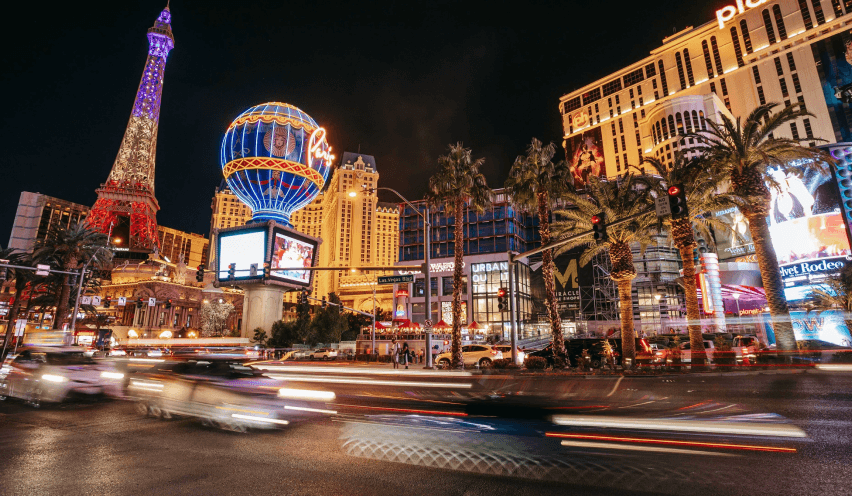
The Strip after dark on a November Saturday.
Formula 1 cars run along Las Vegas Boulevard past the Bellagio fountains, Caesars Palace, and the illuminated Strip, with the Sphere on the horizon and the city’s entertainment infrastructure folded into the race weekend. The crowd arrives from around the world for a scene so comprehensively over-the-top that it circles back around to genuinely extraordinary.
The Las Vegas Grand Prix is one of Formula 1’s most deliberately spectacular events. It is the race where the sport stopped trying to fit into a city and instead built the city around the race. The Strip section of the circuit is not a compromise between urban infrastructure and racing requirements — it was designed as a statement. This is Formula 1 in the entertainment capital of the world, on its own terms.
It is also one of the most divisive races on the calendar. Opinions range from those who found the spectacle hollow and the logistics overwhelming to those who consider it the pinnacle of what a Formula 1 race weekend can be. This page gives you the honest picture, the specific planning advice, and the information you need to decide whether
Las Vegas is the right race for you and, if it is, how to do it properly.
Every Formula 1 race has a circuit. Las Vegas has a show.
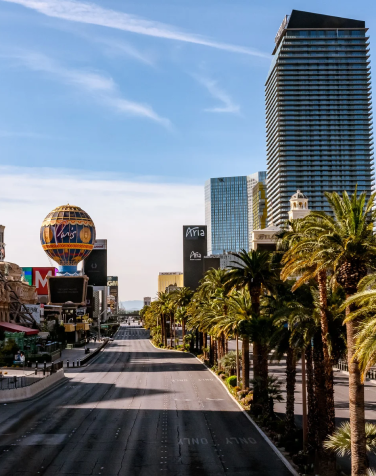
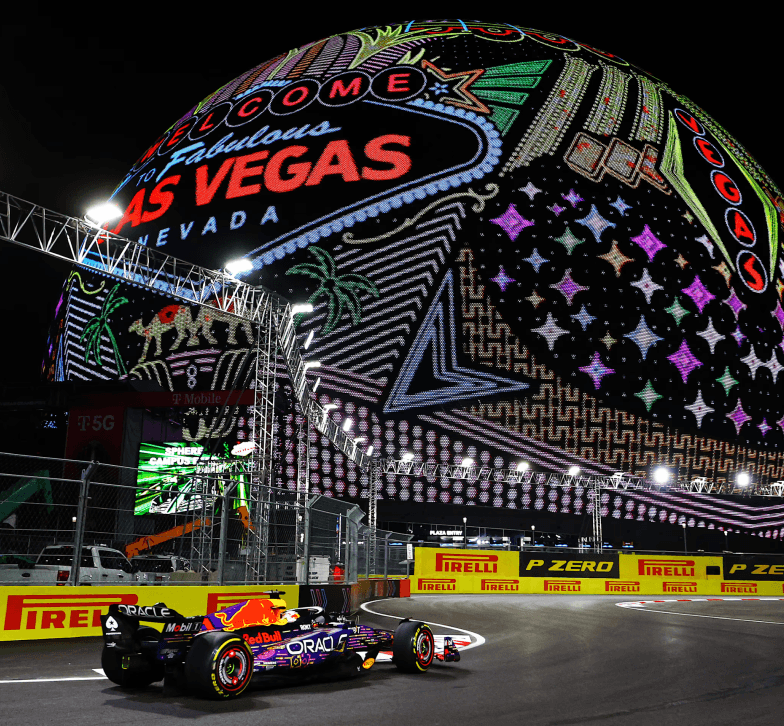
The Las Vegas Strip Circuit runs 6.201 kilometres through the city, including a 1.9-kilometre straight along Las Vegas Boulevard, framed by some of the Strip’s best-known landmarks. Cars exceed 340 km/h past the Bellagio fountains and Caesars Palace. The Sphere, which opened in 2023, glows above the circuit near Sands Avenue. It is a backdrop few circuits can match.
The night race format takes the spectacle further. Las Vegas runs under lights not because the desert heat demands it — November nights in Las Vegas can be cold — but because the city is at its most striking after dark. The Strip at racing speed under the casino lights, reflected in the glass of the hotels and amplified by the crowd, is one of Formula 1’s most produced visual spectacles.
What makes Las Vegas categorically different from Monaco, Singapore, or Melbourne is that the entertainment infrastructure surrounding the circuit is not incidental to the race experience — it is the race experience. There is no equivalent of Monaco’s harbour culture or Melbourne’s food scene as a separate dimension to the racing. In Las Vegas, the casinos, the shows, the restaurants, the nightlife, and the race are all part of the same production. You are not attending a Formula 1 race in Las Vegas. You are attending Las Vegas, which happens to have a Formula 1 race at its centre.
Las Vegas divides opinion. Before you book, you deserve the honest picture rather than the promotional version.
Las Vegas delivers a striking night-race setting, with Formula 1 running through the illuminated Strip alongside casino-hotel hospitality, shows, restaurants, and major entertainment venues.
The schedule runs late, race nights can be cold, and Strip access becomes more complex during road closures. Plan for warm layers, long evenings, substantial walking, and reduced vehicle availability after major sessions.
Las Vegas is the right race for some travellers and less suitable for others. Understanding the difference helps you choose a weekend that matches your priorities.
Las Vegas suits travellers who:
It may not suit travellers who:
For travellers seeking a premium, entertainment-led weekend, Las Vegas has luxury infrastructure that maps unusually well to Formula 1: suite-style hotels, high-end dining, major shows, and multiple hospitality formats around the circuit.
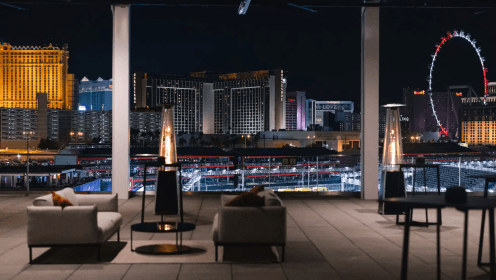
Flagship Race Hospitality
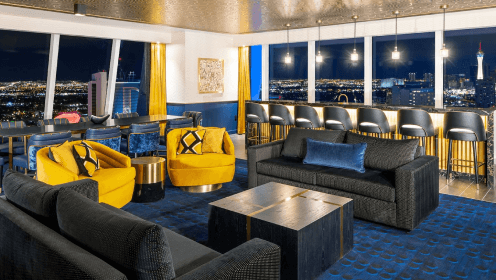
Luxury Hotel Suites
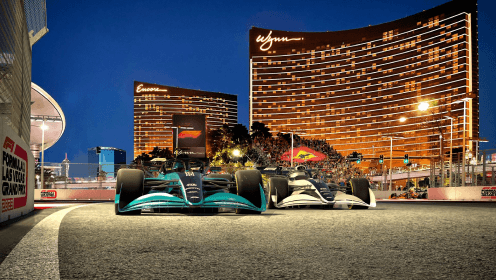
Race-Viewing Hospitality at Wynn Las Vegas
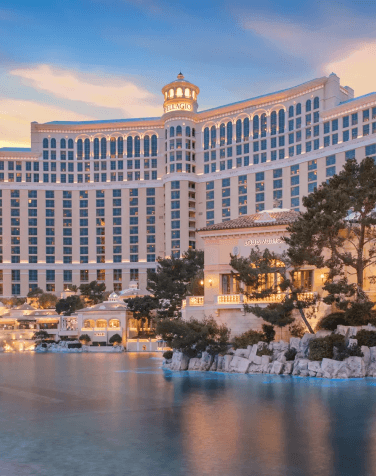
Central Strip luxury, dining, fountain views, and race-weekend atmosphere.
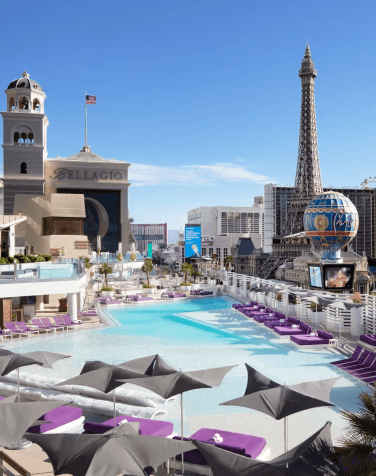
Design-led Strip hotel with dining, nightlife, and a central location.
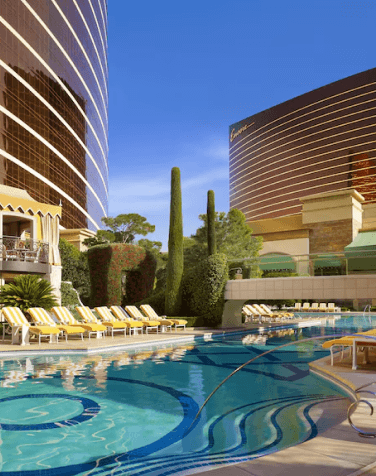
Refined luxury, spacious rooms, major dining, and a calmer north-Strip setting.
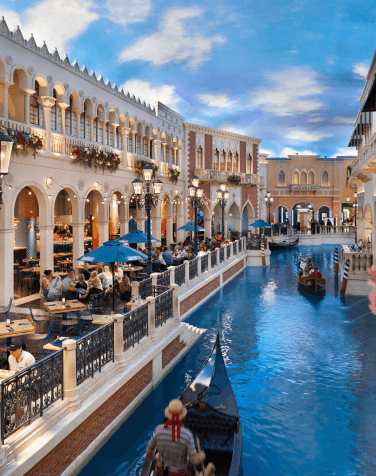
Suite-style accommodation, dining, shopping, and large-resort convenience.
For the Grand Prix Escapes audience who wants Las Vegas but not the immersive
Las Vegas is workable on foot for guests staying near their circuit gate, but Strip distances are longer than they appear on a map. Pedestrian bridges, crowds, and cold late-night temperatures make hotel location and gate planning important.
Major Strip road closures affect vehicle access throughout race weekend. Pedestrian routes and hotel shuttles are often the most practical way to reach your gate. Check your hotel's race-weekend shuttle arrangements before booking.
If your hotel is near your gate, walking is usually the simplest option. Allow for pedestrian bridges, crowds, and cold late-night temperatures.
For off-Strip stays, consider a pre-arranged transfer. Confirm the operator's race-weekend pickup and drop-off points, road-closure arrangements, and post-session availability before booking.
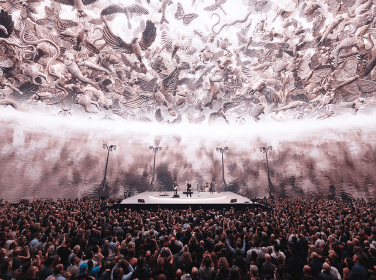
Book world-class residencies and headline shows early for race weekend.
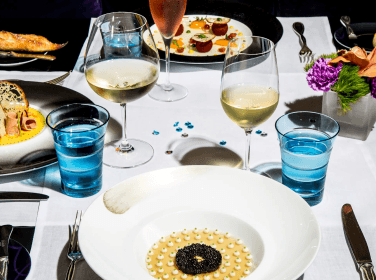
Explore exceptional dining, from Joël Robuchon to the Strip's wider choice of premium restaurants.
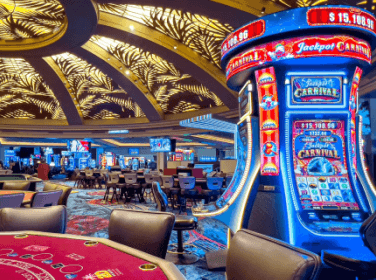
Explore premium casino experiences at Bellagio, Wynn, and Venetian, or skip gambling entirely.
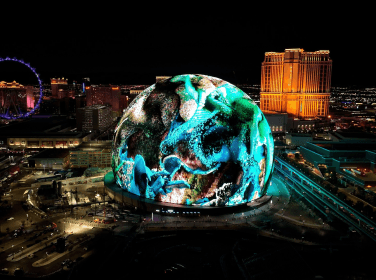
Experience spectacular LED visuals and immersive entertainment at this iconic Las Vegas landmark.
November nights can be cold, especially during long periods in outdoor grandstands or hospitality areas. Pack proper warm layers and check the forecast close to race weekend.
Check the official session timetable before booking dinners, shows and transfers. Allow time for post-session crowds and recovery, particularly if you are adjusting to a significant time-zone difference.
Book your Strip hotel as soon as your race dates are set and reservations open. Circuit-adjacent rooms and preferred room categories can sell out early.
Las Vegas rewards early planning because Strip hotels, preferred race access, major shows, and high-demand dining all compete for the same race-weekend dates. Start with the elements that are hardest to replace, then build the entertainment around them. The 2026 Las Vegas Grand Prix runs 19–21 November. The 2027 edition is scheduled for 18–20 November. Check the final official timetable before arranging shows, dining and transfers.
For the right traveller, unequivocally yes. For the wrong one, it is an expensive lesson in understanding what you actually want from a Formula 1 race weekend.
The Las Vegas Grand Prix is worth it if you want one of Formula 1’s most visually spectacular experiences. The Strip section of the circuit at race speed under full illumination is genuinely extraordinary and it exists nowhere else. The hospitality infrastructure — the casino hotel suites, Wynn race-viewing experiences — is among the most luxurious on the calendar. The entertainment programme is a major part of the race-weekend proposition.
It is less compelling for visitors whose main priority is the quality of the on-track racing alone. Las Vegas is best evaluated as a high-production night-race spectacle with an entertainment-led city experience, rather than as a pure motorsport pilgrimage.
The honest bottom line: Las Vegas is among Formula 1’s most highly produced events and it should be evaluated on those terms. It is a spectacle event hosted by the world’s entertainment capital, and if that is what you want from a race weekend, it delivers it at a scale few other races approach. Pack warm layers, secure your preferred hotel and race access when booking windows open, plan your route back from the circuit before race weekend, and prepare to experience Formula 1 on one of the sport’s most theatrical stages.
This page explains the key choices. The Las Vegas GP Planning Guide gives you the execution plan: how to choose a hotel base and race access, what to book first, how to structure late race nights around shows and dining, and the practical checklist for Strip transport, gate access, weather, and recovery.
Popular